


docs/user/getting-started/quick-start.md
title: Quick start description: Deploy an example app to your own server and open it at an https address.
This page puts a small example app, render-examples/express-hello-world, online at an https address on your own server.
You need a GitHub account and a server: Ubuntu LTS, Debian 12–13 or Amazon Linux 2023 with a public IP address, that you can reach as root over SSH. A small VPS from any provider, like Hetzner or DigitalOcean, is plenty to start. Builds run on it too, so give it 2 GB of memory or more.
Sign in
- Go to ployz.dev and click Deploy.
- GitHub opens. Approve Ployz there.
Ployz creates your organization and opens Add your app.
Add the example app
- Choose GitHub repository.
- Paste
https://github.com/render-examples/express-hello-worldinto the search box. - Under Public repository, click Deploy render-examples/express-hello-world.
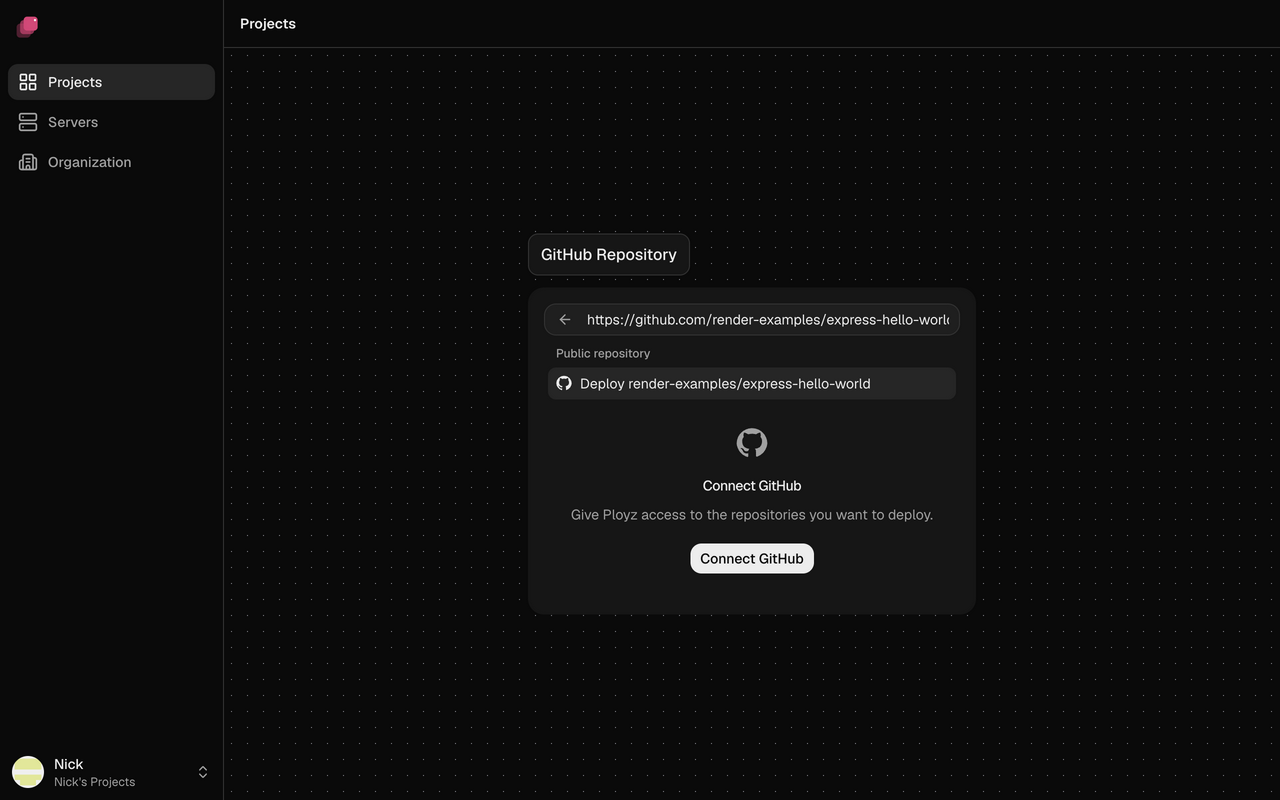
Ployz creates a project named express-hello-world (with a short suffix if that name is taken), and the app appears on its canvas as the
service express-hello-world. Nothing runs yet: your changes wait in the bottom bar until you
deploy.
Using your own app? Click Connect GitHub instead and install the Ployz app on your
repository, so every push deploys it; see Deploy from GitHub. Your app
must listen on the PORT variable, or you enter its port in the next step; see
Choose the port.
Give it an address
- Click the
express-hello-worldcard, then Settings, then Generate Domain under Networking. - Leave Port blank. The example listens on
PORT. - Click Generate Domain.
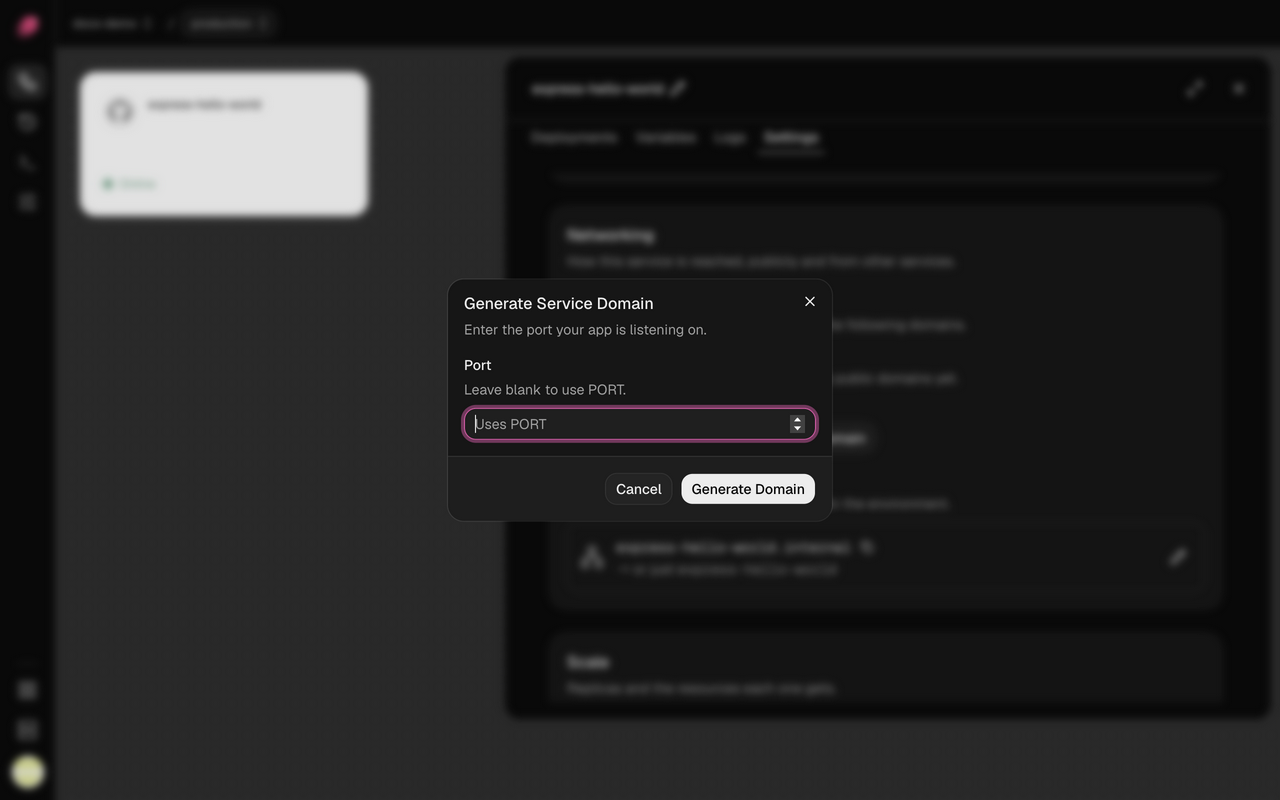
The address goes live on your first deploy.
Add a server
While you have no server, the bottom bar shows Add servers where Deploy would be. Add this first server from your terminal, so it joins and can take the deploy.
Install the CLI and sign in:
sh1 curl -fsSL https://ployz.sh | sh 2 ployz login Run
ployz server add --command. It prints a line to paste on the server and an enrollment token beside it, then waits.Connect to your server with
ssh root@203.0.113.10(your server's IP), paste the line and press Enter. Paste the token when it asks.When the command finishes, the server shows on the Servers page. Not on Ubuntu, Debian or Amazon Linux? See Start without ZFS.
The command installs Ployz and adds the server to your organization. If your provider puts a firewall in front of it, open these ports.
Add servers in the bottom bar makes a Fleet Token instead. A server that runs its install line shows up under Waiting to join on the Servers page. Select it and click Enroll to choose its storage and name. See Add many servers for the full flow.
Starting servers from a script or from cloud-init user data? Install them with a Fleet Token. Each one installs Docker and Ployz, then waits until you say it can join.
Deploy
Once the server has joined, Deploy appears in the bottom bar, next to Apply 2 changes: the new service and its address.
- Click Deploy. The deployment page opens.
- Ployz builds the app, then starts it on your server. Click the build or the service to follow its logs.
- Wait for Deployed. The first build takes a minute or two.
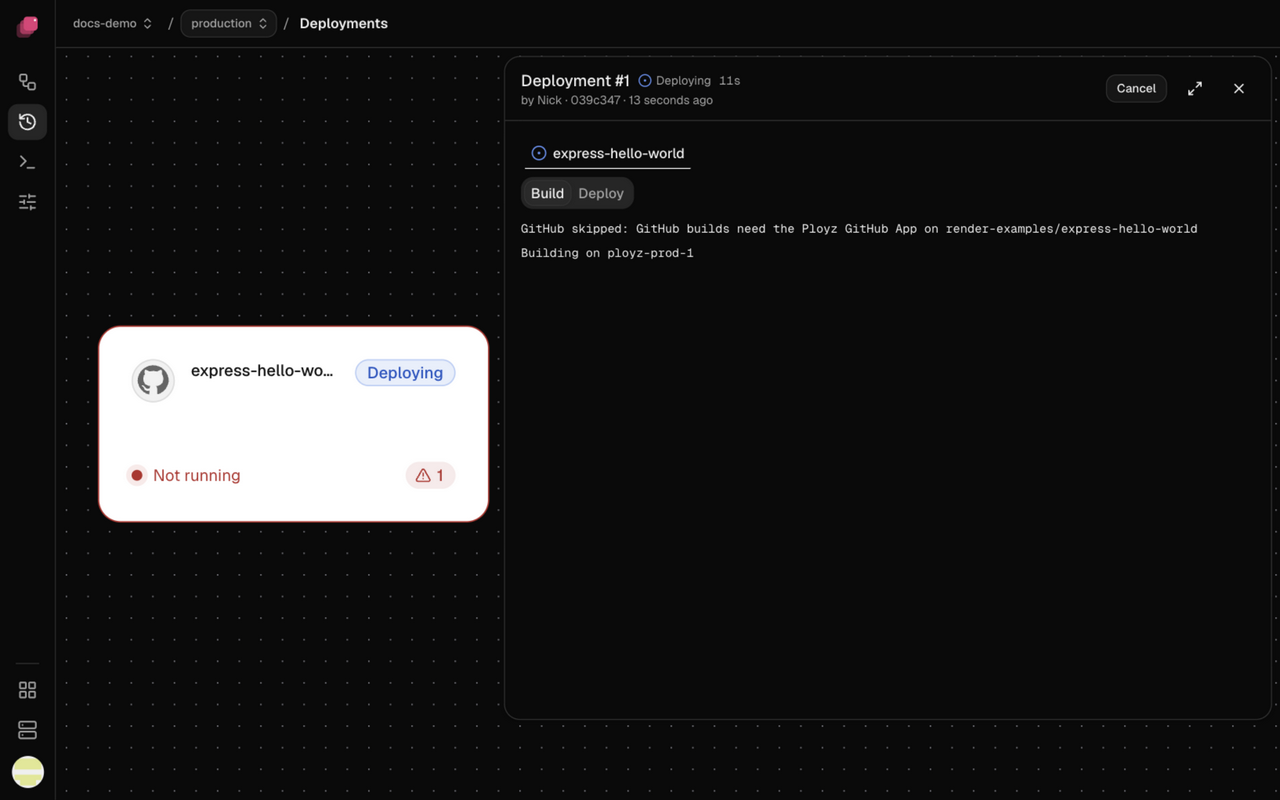
While the first deploy runs, the service's card reads Starting. If the deployment fails, its page says why; see Troubleshooting deployments.
Open your app
The card turns Online and shows the address, like
express-hello-world.acme-x7q2.ployz.app. Open it from Settings → Networking.
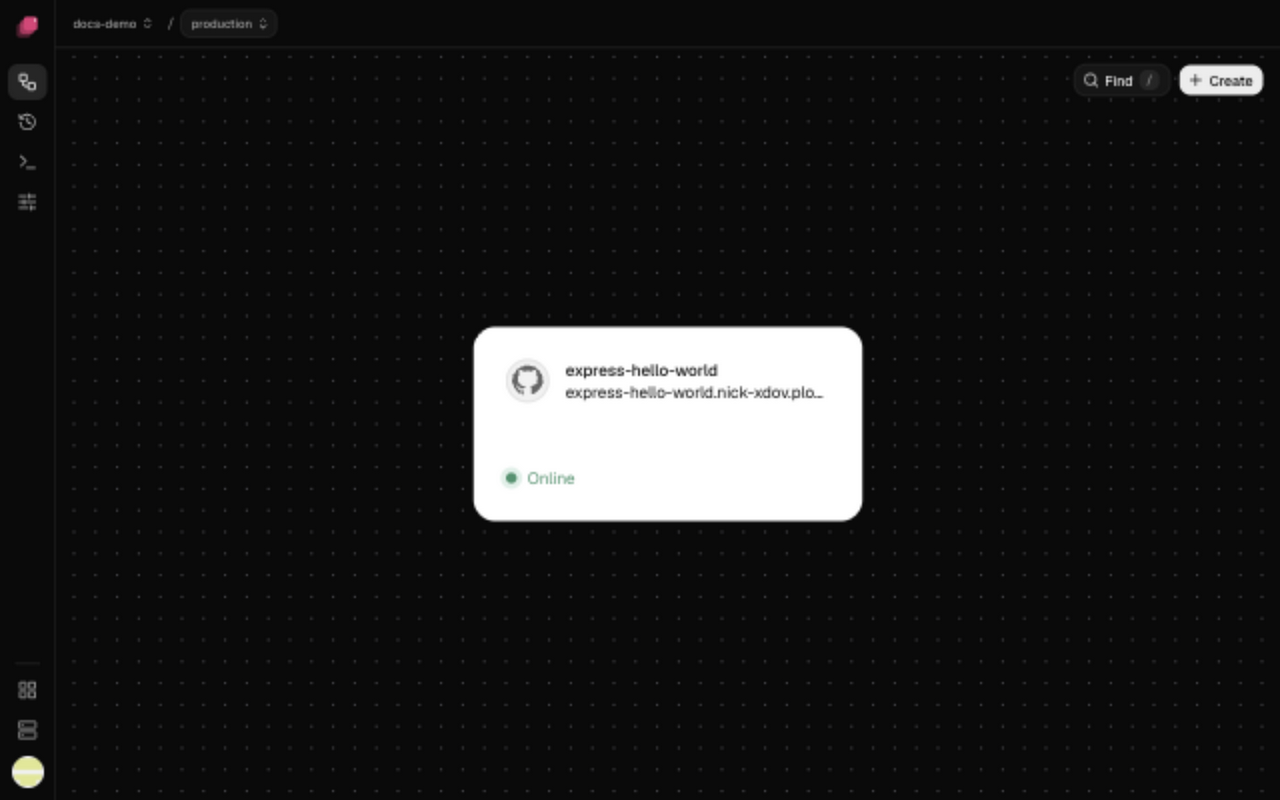
If the page doesn't load, see My app isn't reachable.
Next: deploy your own app from GitHub. Connecting GitHub also turns on deploy on push, and lets you turn on preview environments.